Cloud Service
Overview
Cloud Service is the platform's built-in hourly billing model for virtual machines. Customers hold a credit balance, and the system meters their running instances (a single virtual machine is called an "instance") every hour and deducts the cost from that balance. Admins use Cloud Service when they want pay-as-you-go pricing instead of fixed monthly subscriptions handled by an external billing system.
Cloud Service charges per hour against credit. Self Provisioning is a different model where users get a fixed pool of CPU, RAM, and storage and create instances inside that pool with no per-hour charge. Do not confuse the two.
Cloud Service only meters usage against credit. To let customers top up that credit with a card or wallet, and to issue invoices or refunds, see the Payments and Account Credit guide.
Concepts
- Credit: an integer amount of money stored on the user's account, expressed in cents. The Currency record converts credit to a display value.
- Currency: a record that defines how credit is shown to users (symbol, name, and how many credits equal one unit of that currency).
- Location: a group of one or more hypervisors (a hypervisor is a physical KVM compute node that runs VMs). When a user picks a location, the system picks a hypervisor inside it automatically.
- Plan: a fixed bundle of resources (CPU, RAM, disk, bandwidth) with a price.
- Plan Group: a labeled set of plans shown together on the create-instance screen, for example "High Compute" or "Budget".
- Instance: one virtual machine owned by a user.
Admin: configure Cloud Service
1. Billing thresholds
Set how the platform reacts as a customer's balance drops.
- Low Balance Threshold: when balance reaches this number, the user gets a top-up reminder email.
- Negative Balance Threshold: a second email is sent when balance goes below zero past this point.
- Suspension Threshold on Negative Balance: when balance falls below this number, all of the user's instances are auto-suspended so no further charges accrue.
- Allow Instance Creation on Negative Balance: if off, users with a negative balance cannot create new instances.
2. Currencies
Currencies are managed inside Billing > Settings, not on a separate Cloud Service page. Open Billing Settings, find the Currencies card, and click Add Currency to add one.
See Payments & Account Credit > Currencies for the full walkthrough and the create-form screenshot. The fields you fill in (ISO code, prefix/suffix, exchange-rate value, default currency) apply to Cloud Service as well: Cloud Service simply reads the currencies configured there to display prices and convert credit balances.
You can keep multiple currencies enabled at once; each user picks a preferred display currency in their account.
3. Plan Groups
Plan Groups give users a clear menu when picking a plan. Open Cloud Service > Plan Groups.
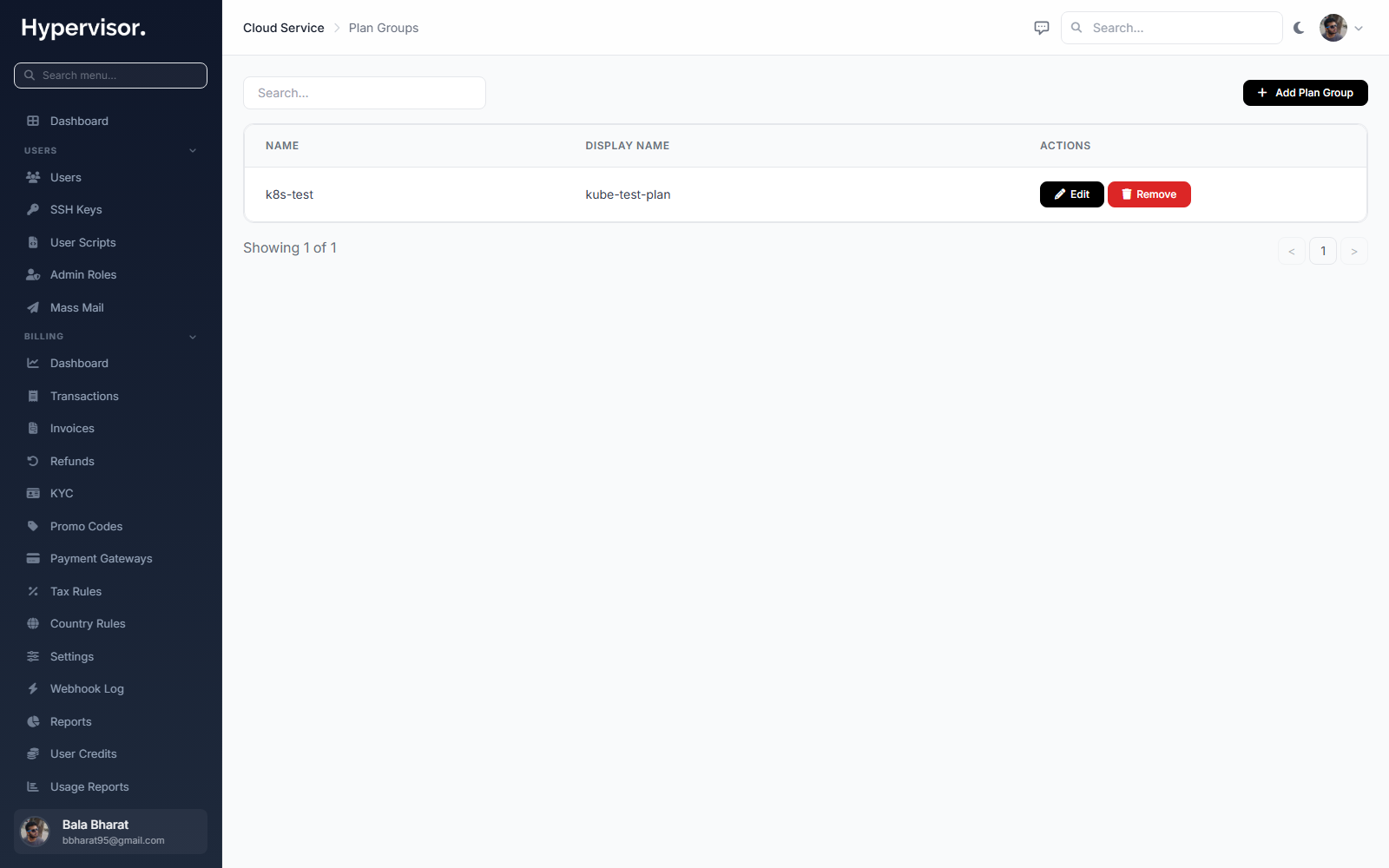
Click Add Plan Group to open the create form.
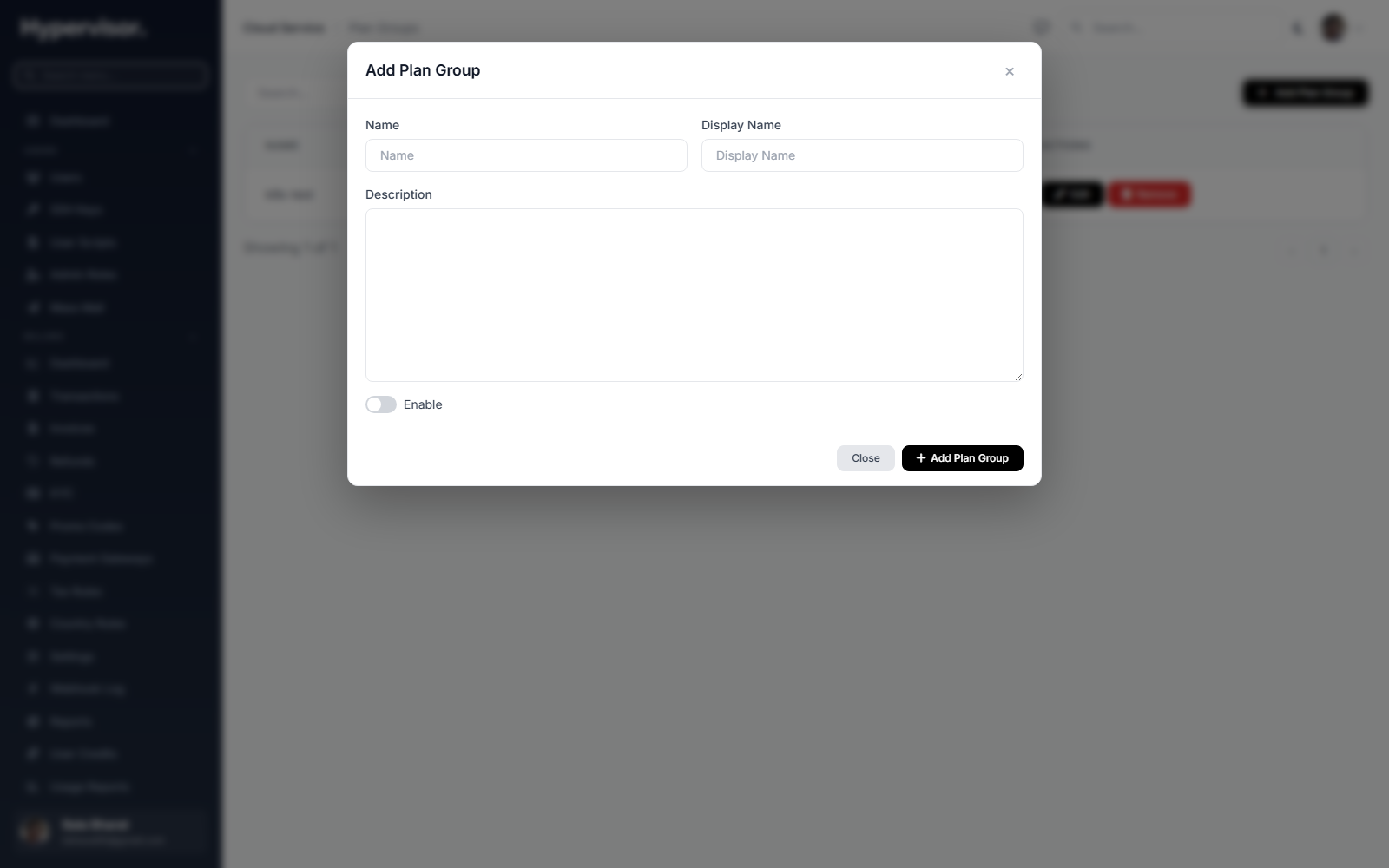
Common groupings:
- Compute-heavy plans
- Storage-heavy plans
- Bandwidth-heavy plans
- GPU-enabled plans
- Budget vs Premium tiers
A plan can belong to one Plan Group. The Plan Group is what the user clicks first; the matching plans appear under it.
4. Plans
Plans live under Compute > Instance Plans.
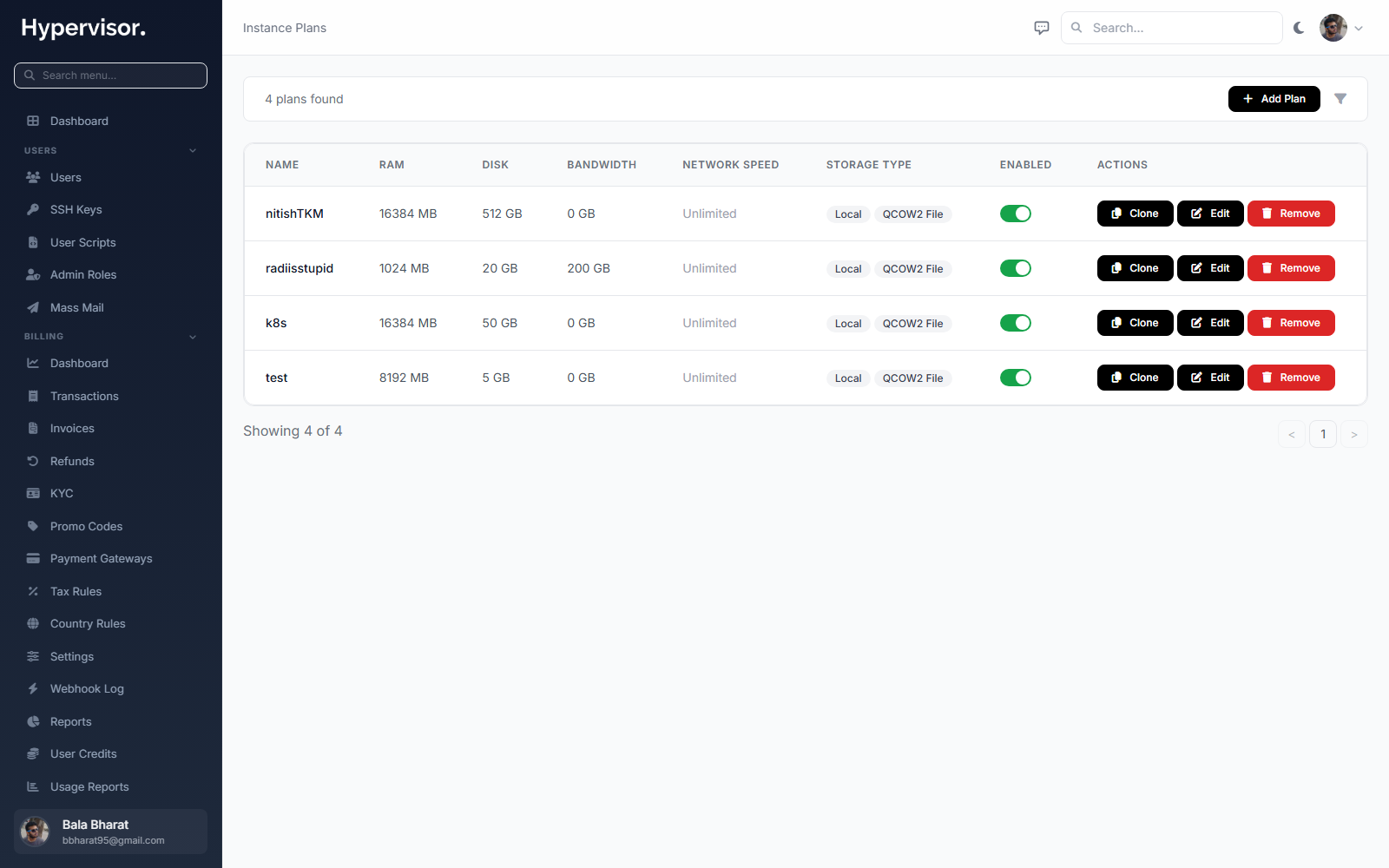
Click Create Plan to add one.
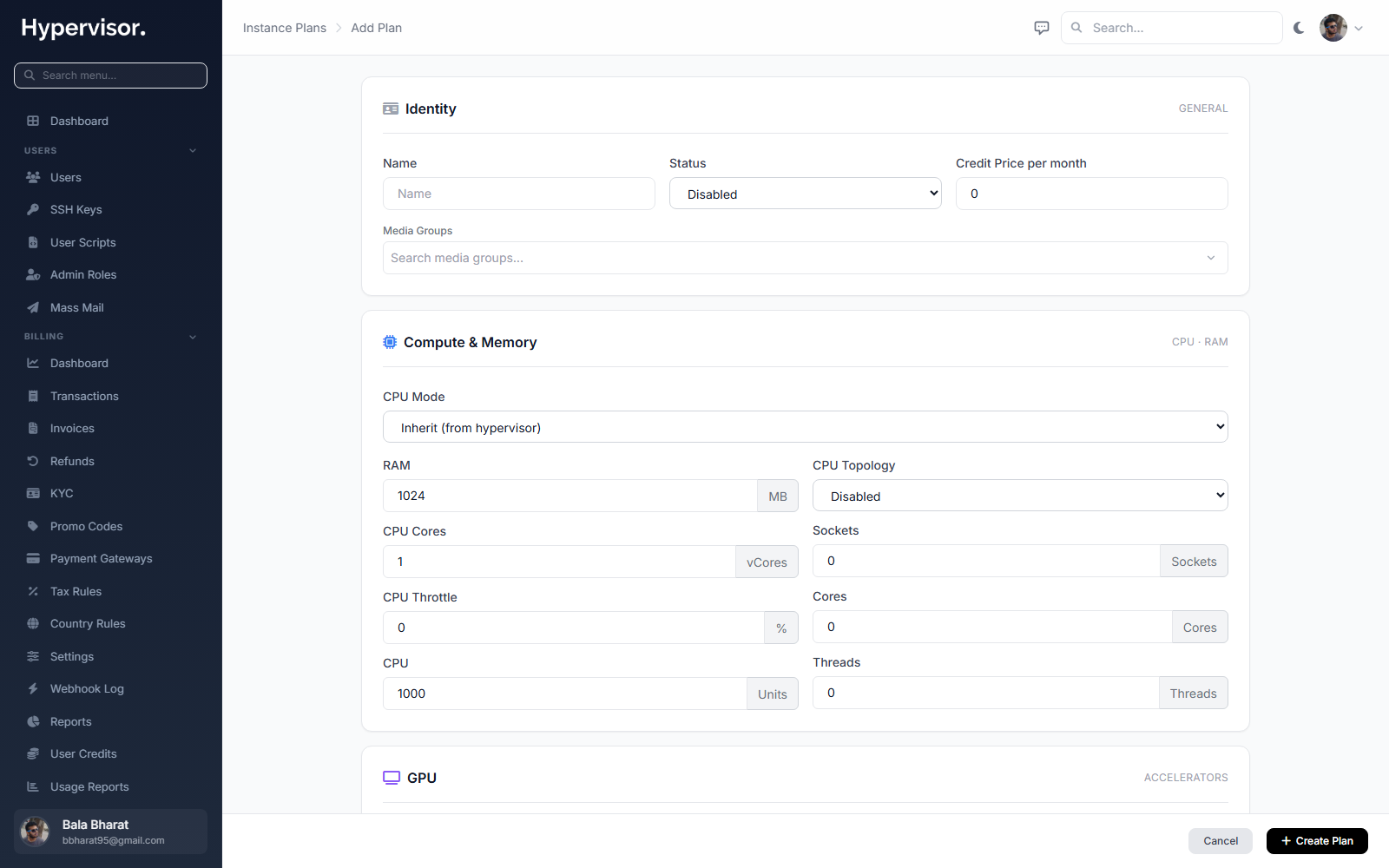
For Cloud Service, the important fields are:
- Resources: CPU cores, RAM, primary disk size, bandwidth quota.
- Credit value: the cost in credits per billing period. The hourly rate is
credit_value / hours_per_month(typically 720). The Currency record then converts that number into the displayed price. - Plan Group: pick the group this plan should appear under.
- Location(s): which locations can deploy this plan. A user only sees plans available in their chosen location.
5. Credit management
Open Cloud Service > Credits to view balances per user and to adjust credit manually (for promotions, refunds, or corrections).
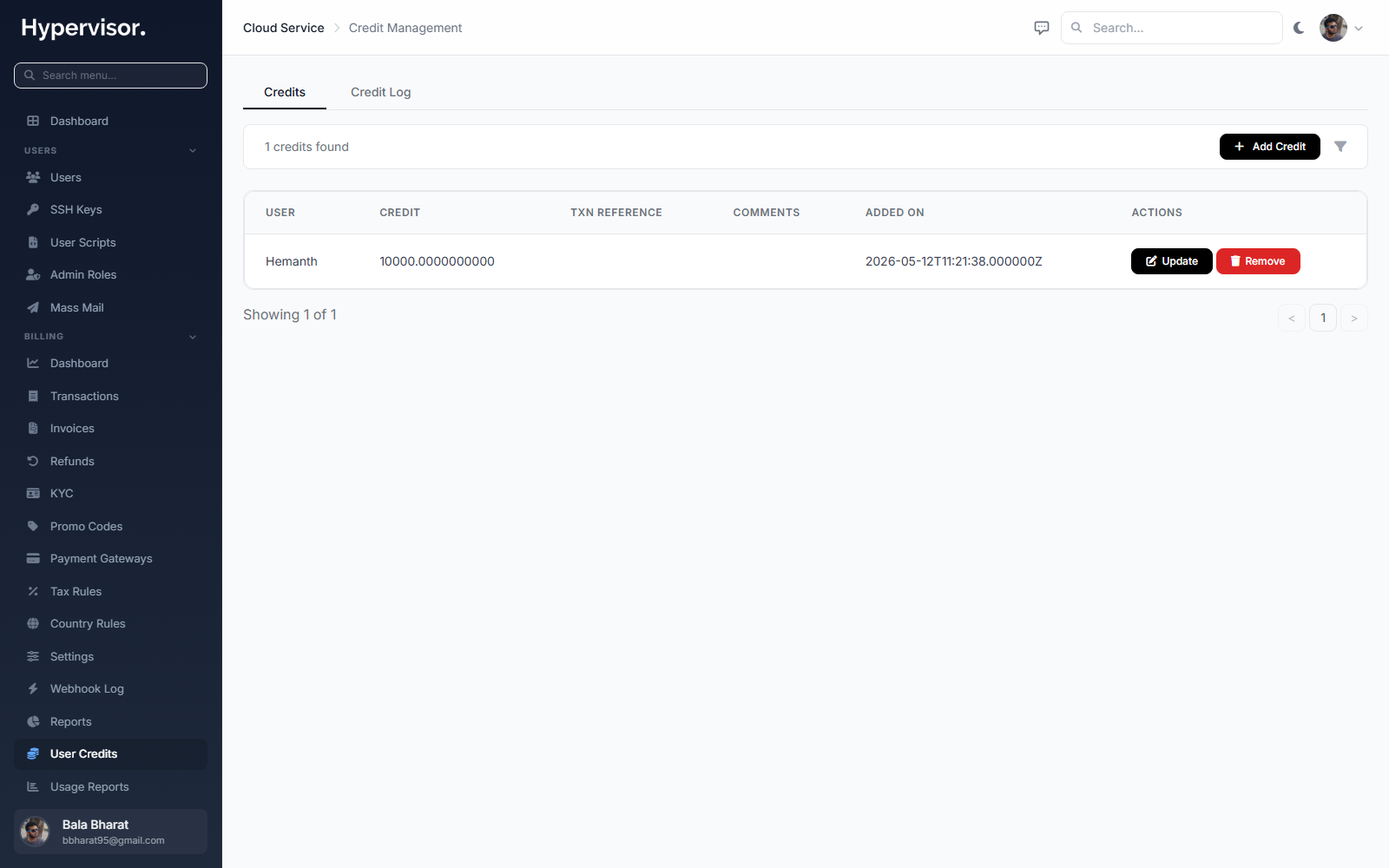
Every adjustment is logged. The user sees the new balance immediately on their dashboard.
6. Usage reports
Open Cloud Service > Usage Reports to inspect what every user is consuming.
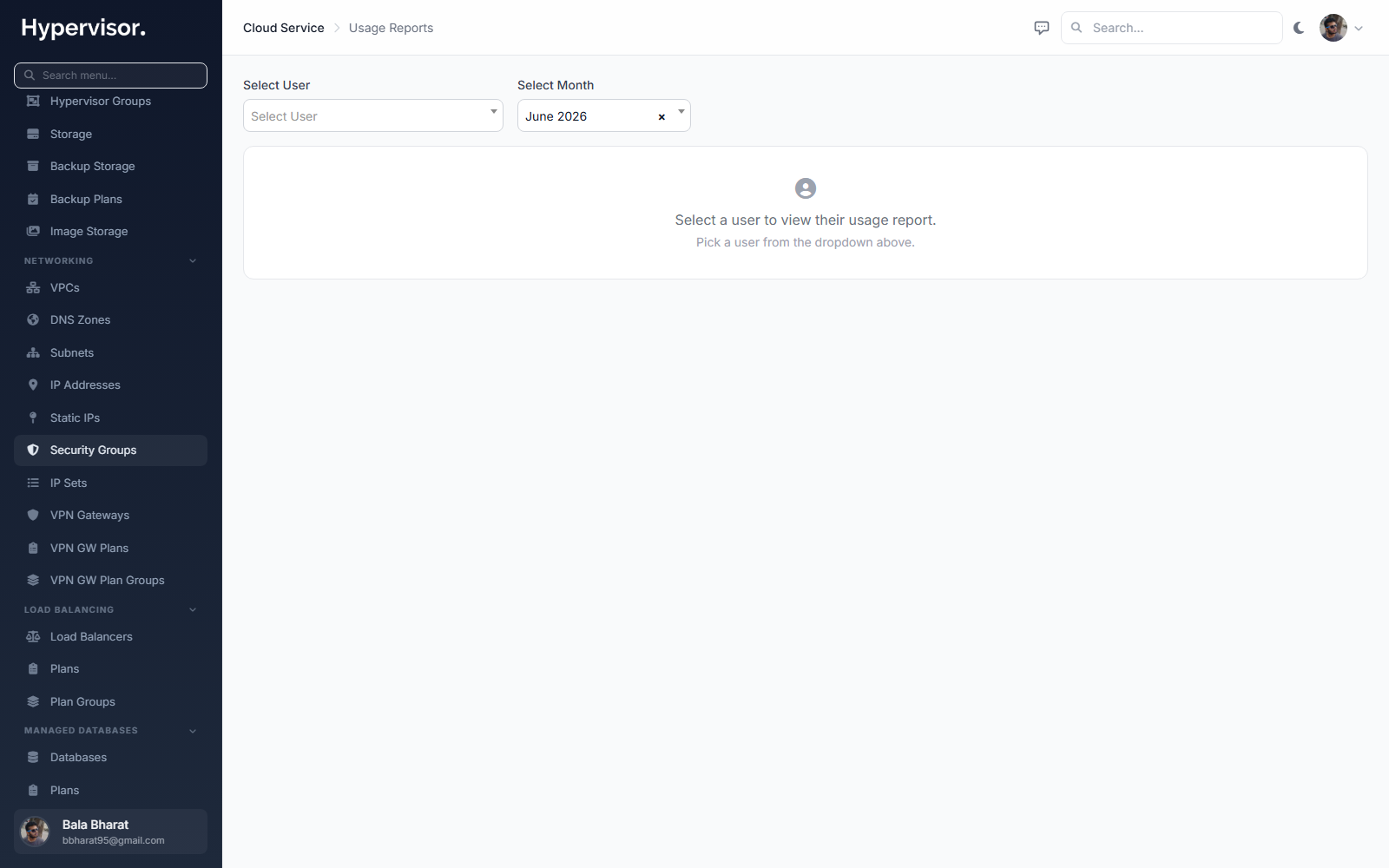
The report shows each instance's hourly rate, hours consumed this month, and total cost. Pick a previous month from the date selector to inspect historical usage.
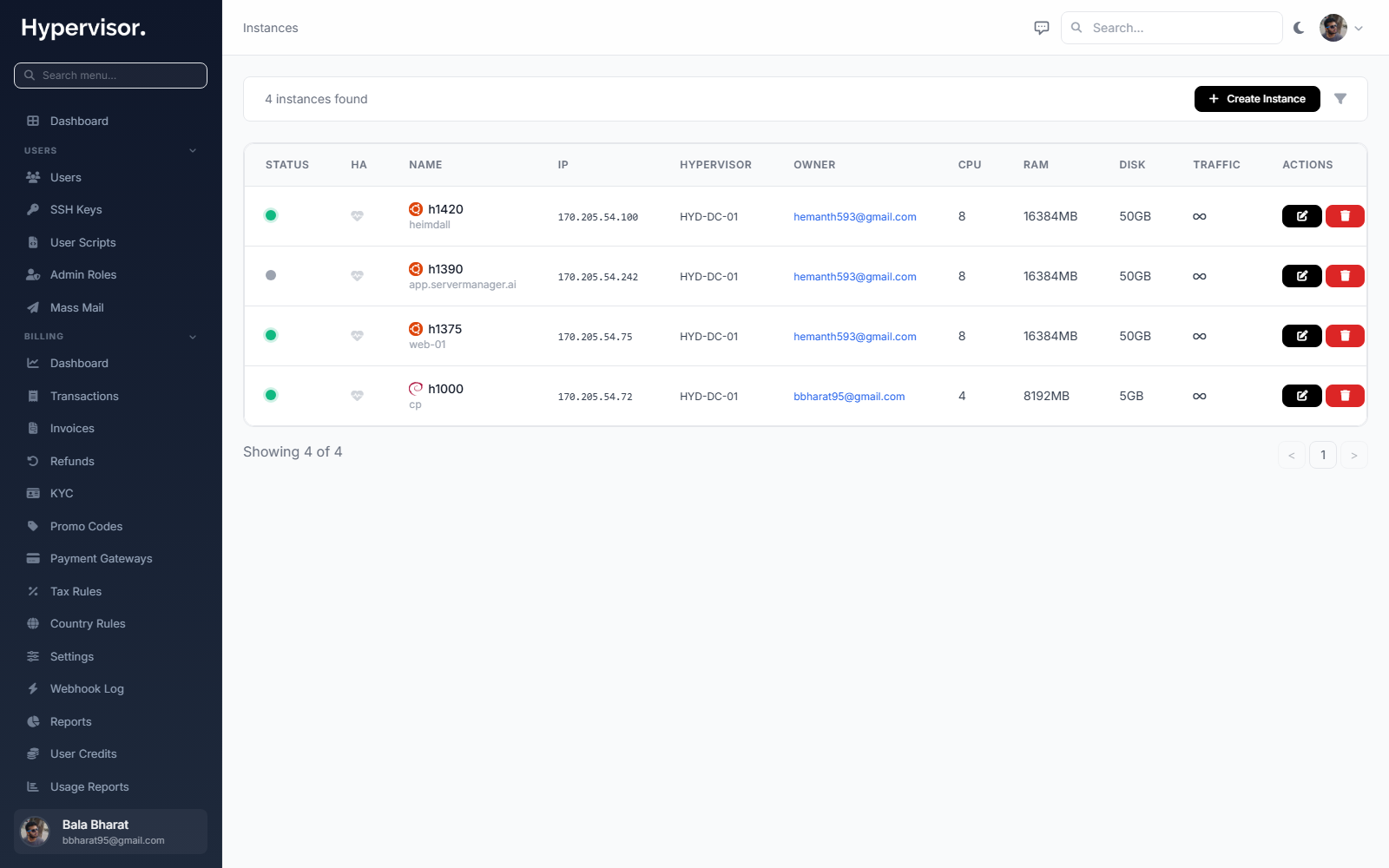
7. Verify Cloud Service instances
Cloud Service instances appear in Compute > Instances alongside instances from other billing models. Their billing column shows the hourly rate.
What end users see
The end-user view of Cloud Service is the dashboard, the create-instance flow, and a per-instance "Change Plan" option.
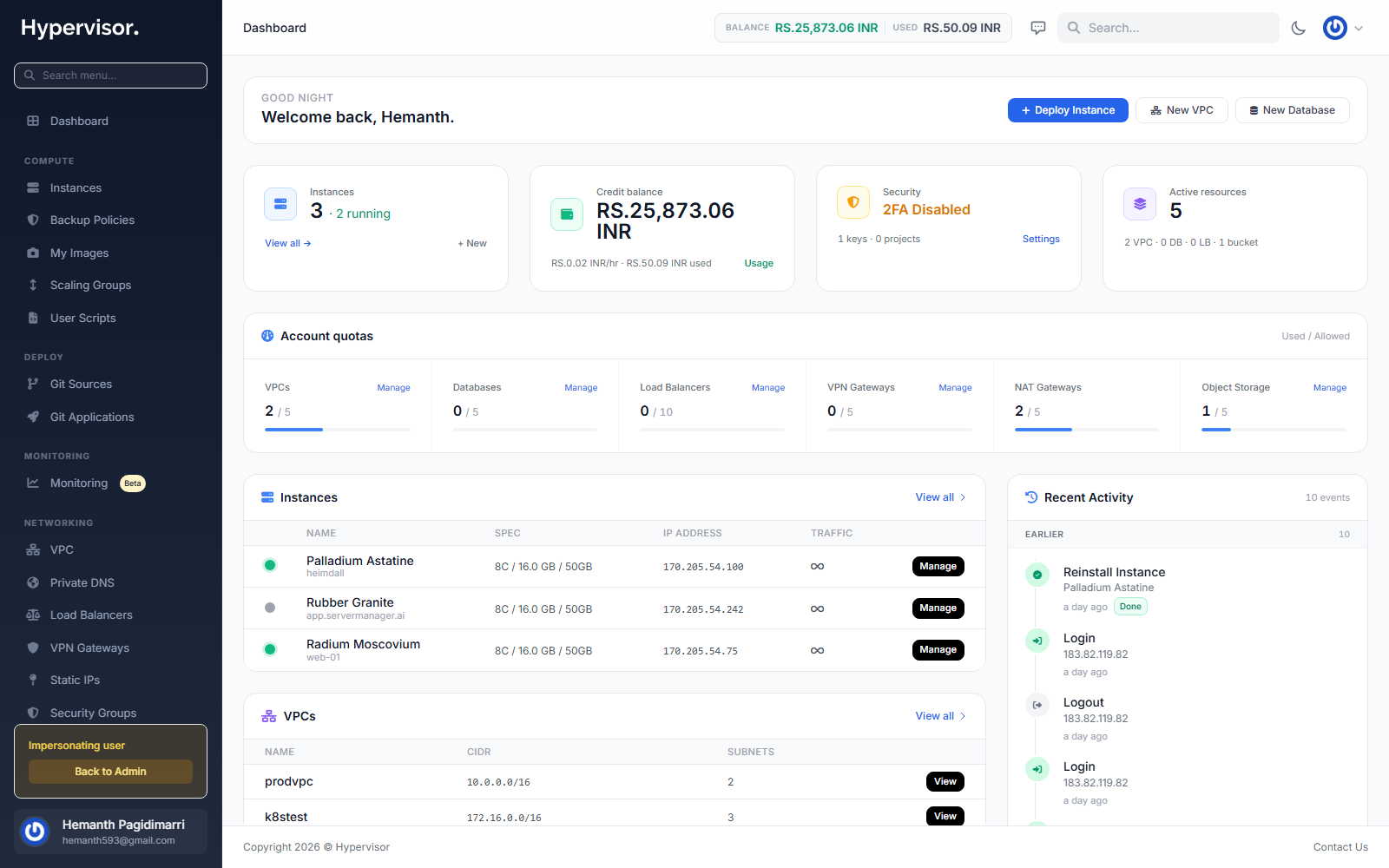
Dashboard
The user dashboard shows current credit balance, account quotas and recent activity. Cloud Service usage shows up here as month-to-date consumption.
Create-instance flow
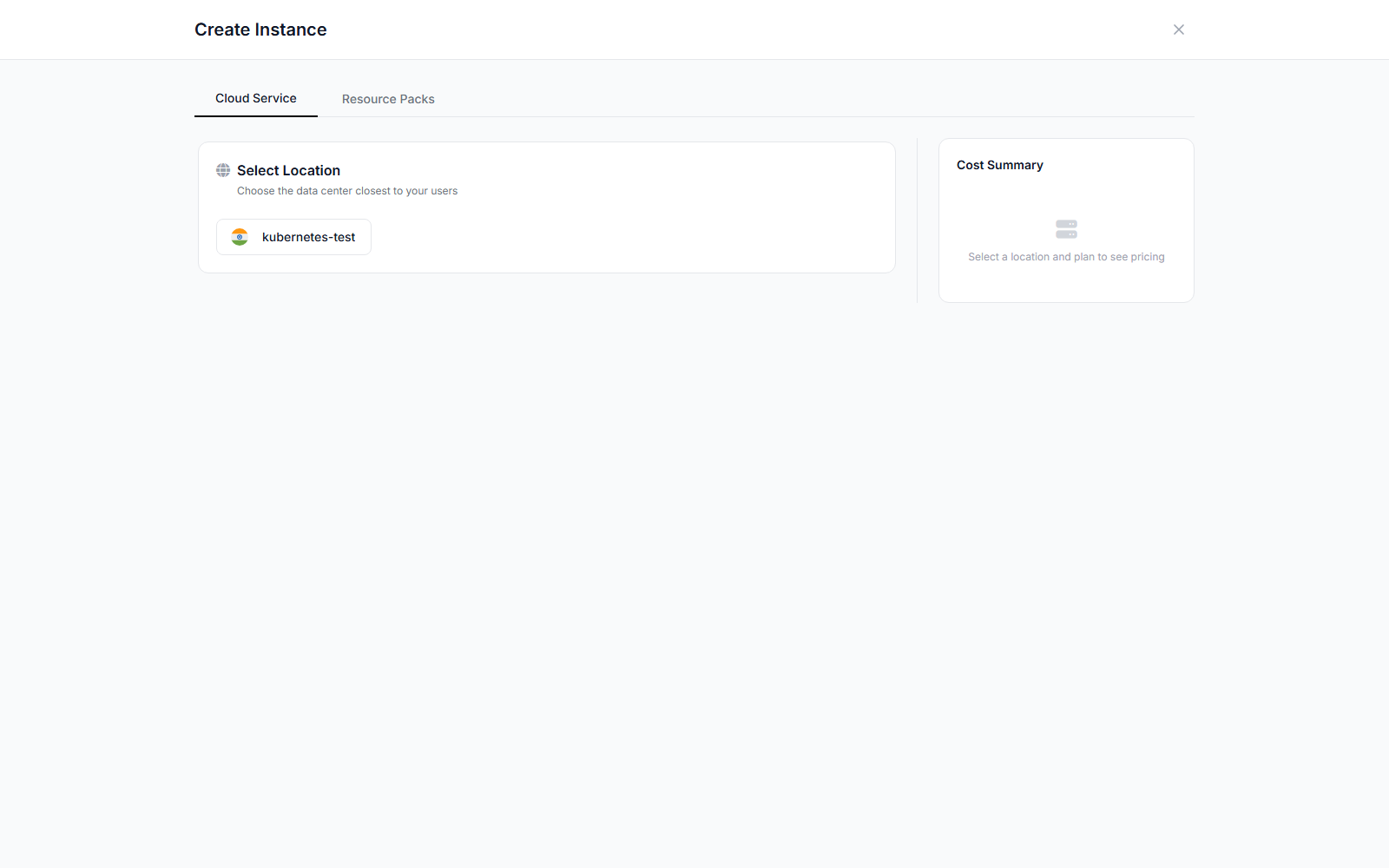
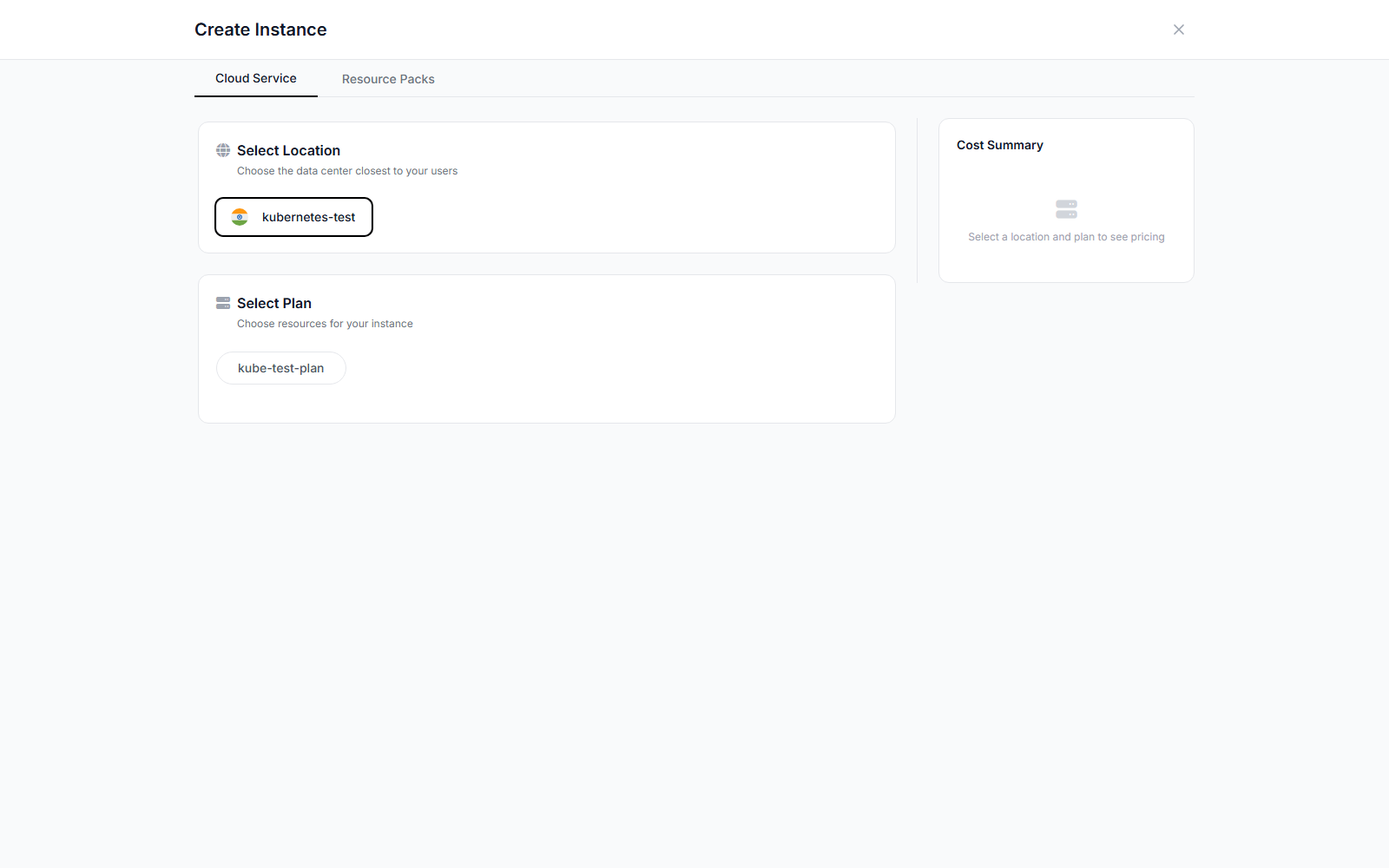
From Compute > Instances the user clicks Create Instance. A side panel opens with the full flow on one screen. The user works top-to-bottom, with the next section revealing as the previous one is answered.
Step 1 - location: pick the data center.
Step 2 - plan group then plan: the panel reveals the available Plan Groups for the selected location. Picking a group reveals its plans. Each plan card shows resources and an hourly + monthly cost.
Step 3 - image: picks the OS template (Ubuntu, Debian, Windows, snapshot from My Images).
Step 4 - addons: optional - extra storage, extra public IPs, backup policy, SSH key, User Scripts.
Step 5 - review: final cost summary including any addons and the first hour's charge. The customer confirms; the instance starts provisioning and shows up in the Instances list with a live deploy log.
Other things the user sees:
- A currency selector in their account preferences.
- A usage-report view listing each instance, its hourly rate, hours used this month, and total cost, with month switching for historical data.
- A "Change Plan" option on each instance. When they switch plan, billing is prorated to the hour: the old rate runs up to the moment of change, the new rate runs after. Only plans valid for the instance's current location and hypervisor are offered.
Common pitfalls
- Credit values are integers (cents), not floats. A plan priced at $0.05 / hour with a 720-hour month is
credit_value = 3600if 1 credit = $0.0001. Always verify with the Currency conversion rate. - A plan with no Plan Group will not be visible in the create-instance flow even if it is otherwise valid.
- A plan with no Location cannot be deployed; assign at least one location.
- Suspension on negative balance is automatic. Test thresholds on a staging user before applying them platform-wide.
Related pages
- Payments and Account Credit - how customers top up their credit balance.
- Instance Images - custom OS templates customers can deploy under Cloud Service.
- Live Migration - move a running Cloud Service instance between hypervisors.